Sicily Divide

The Sicily Divide from Trapani to Catania is a rugged, coast-to-coast bikepacking journey across the wild heart of Sicily. Over 7 demanding days, the route leaves behind typical coastal tourism to reveal an authentic, untamed island of ancient villages, dramatic mountain passes, and silent hinterlands.
Route
↓ Download GPX- 1
Trapani-Alcamo
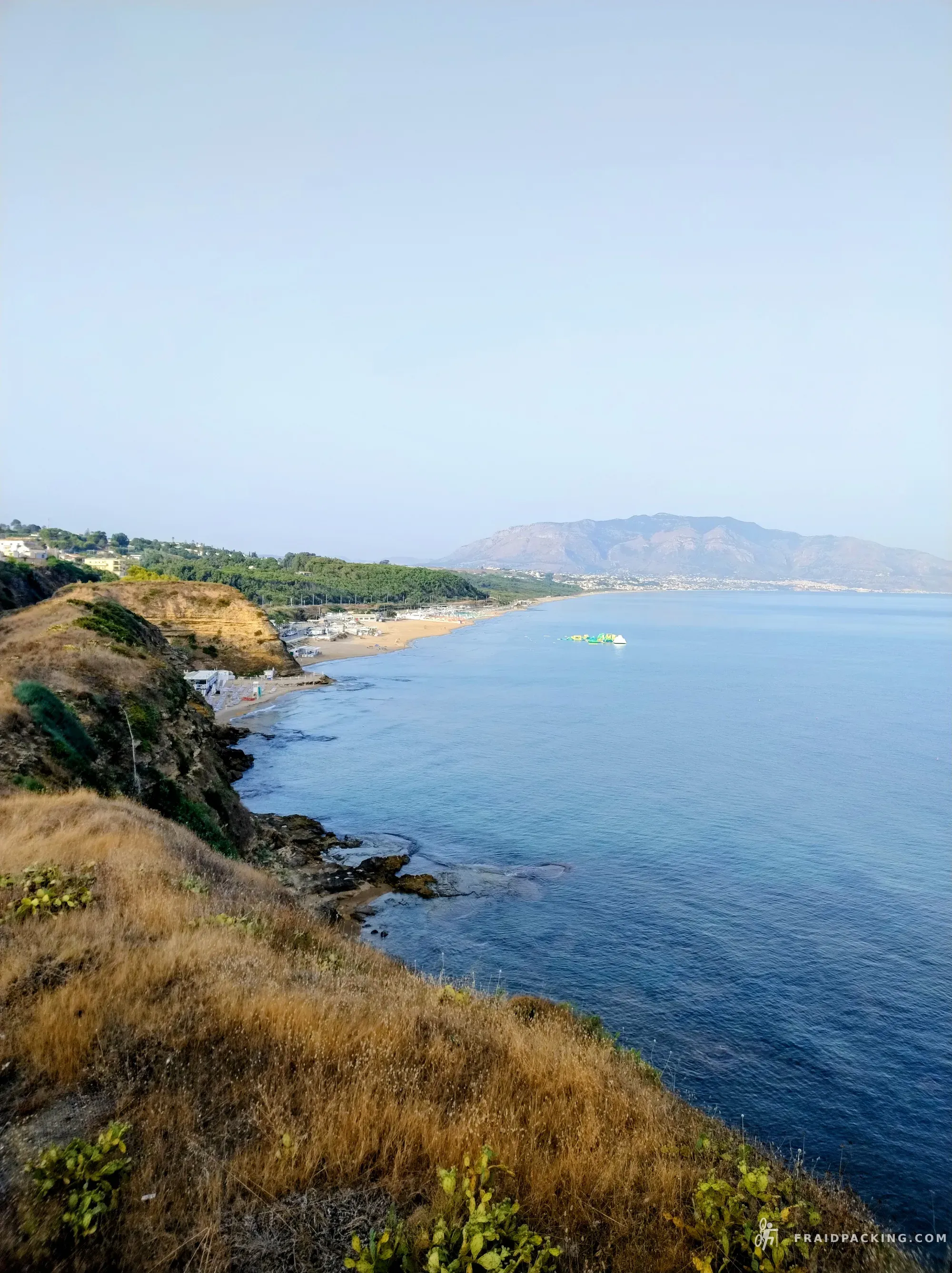
The Sicily Divide begins not with a gentle warm-up but with an immediate declaration of intent — nearly 1,300 metres of climbing packed into the opening day, the island refusing to ease anyone in gently. Leaving the salt-flat shoreline of Trapani behind, the route climbs into a landscape of dry limestone ridges and sun-bleached scrub, the Mediterranean glinting far below before the road curves inland and the sea disappears. The air carries wild fennel and dust, and the effort is relentless but honest. By the time Alcamo appears, legs are already learning the rhythm that will carry riders across Sicily for the week ahead.
- 2
Alcamo-Ficuzza
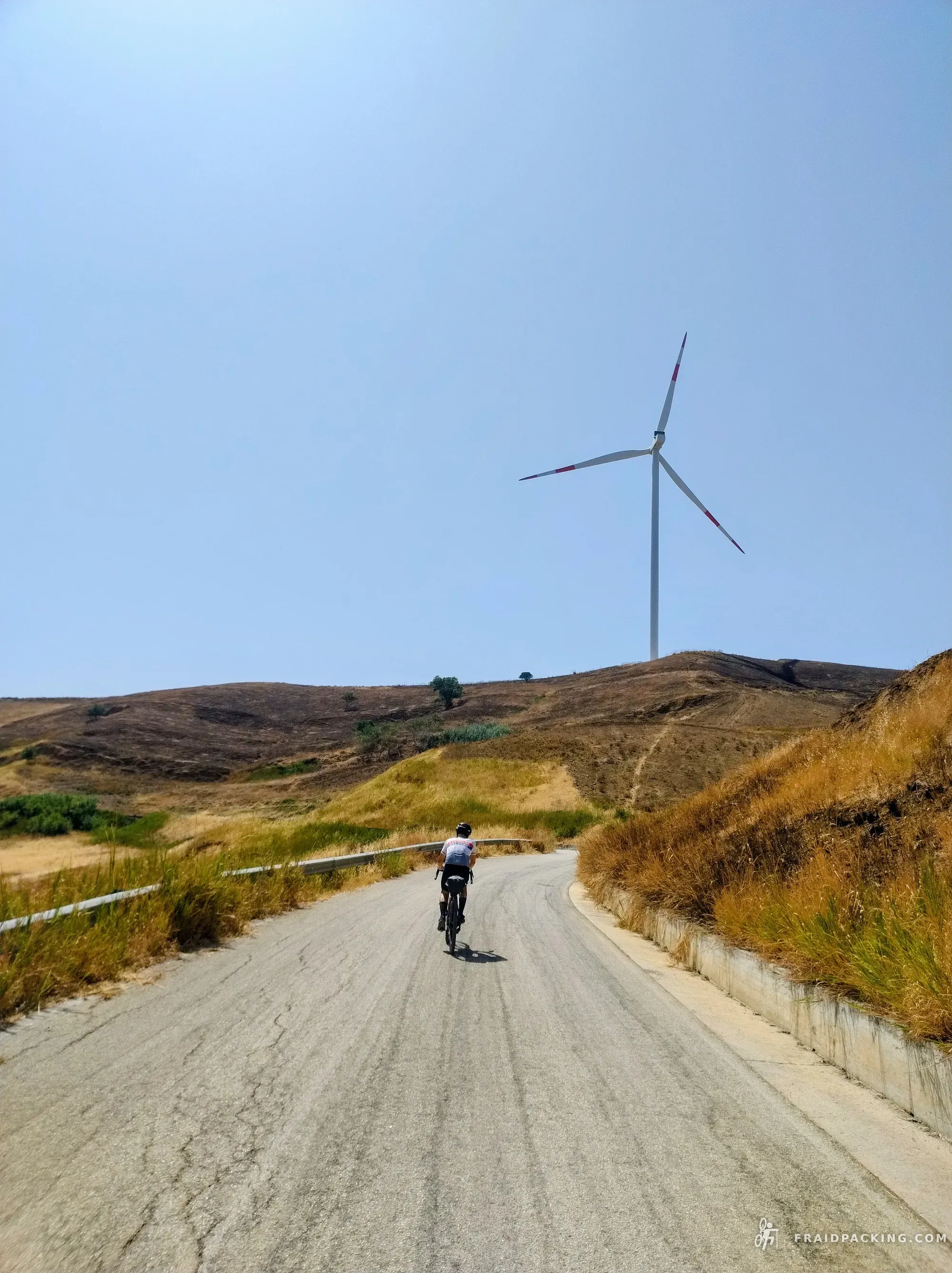
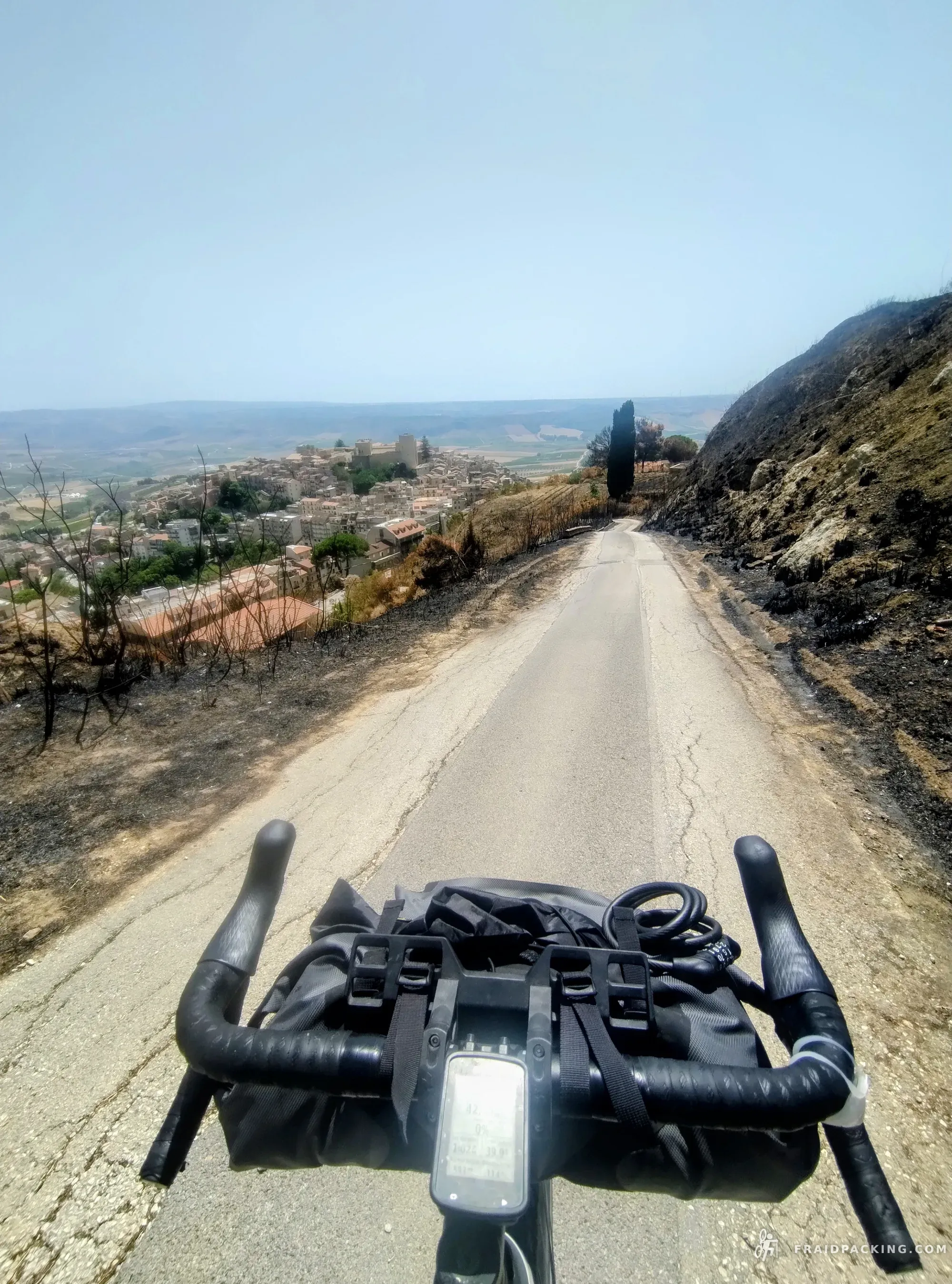
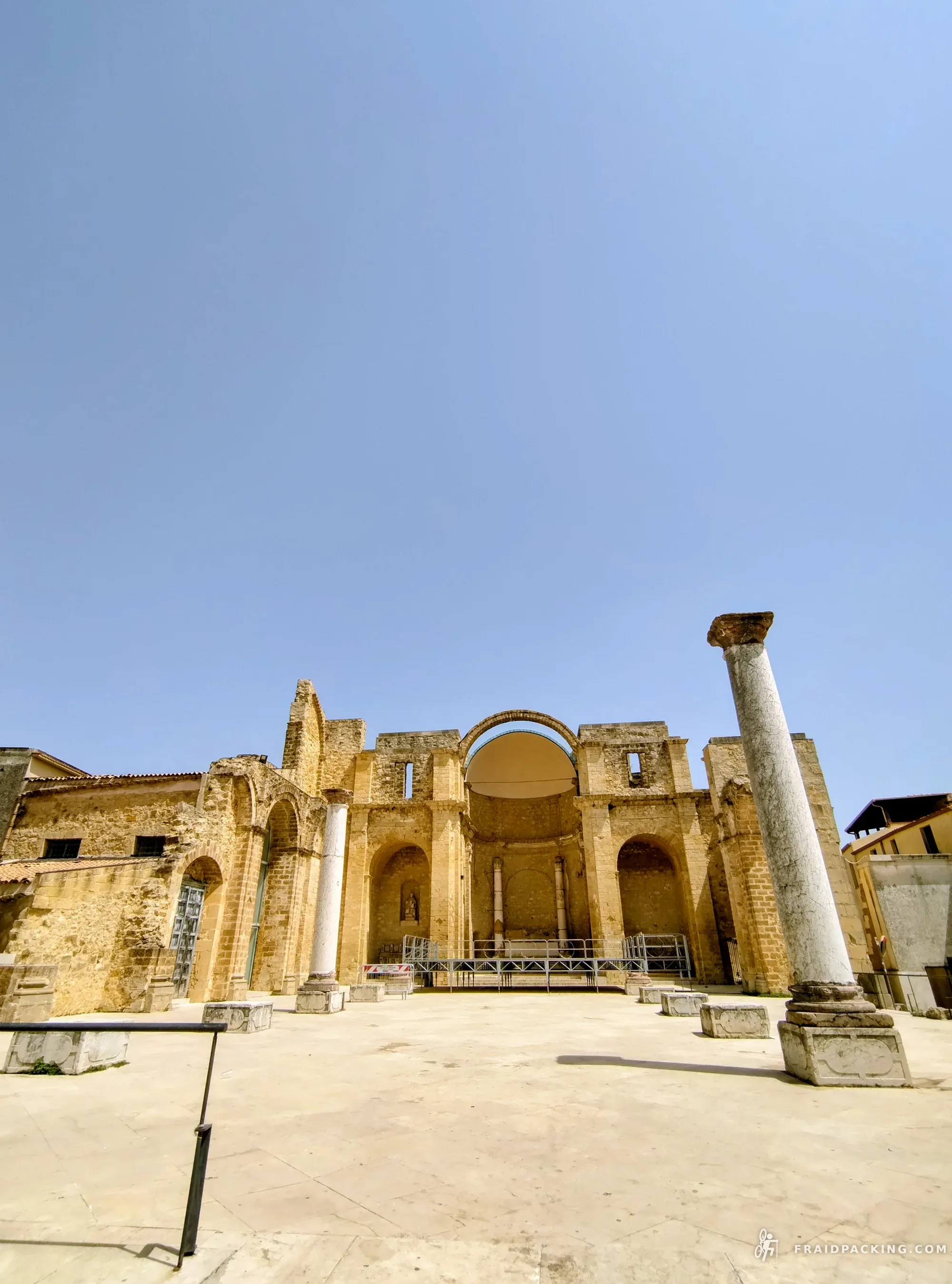
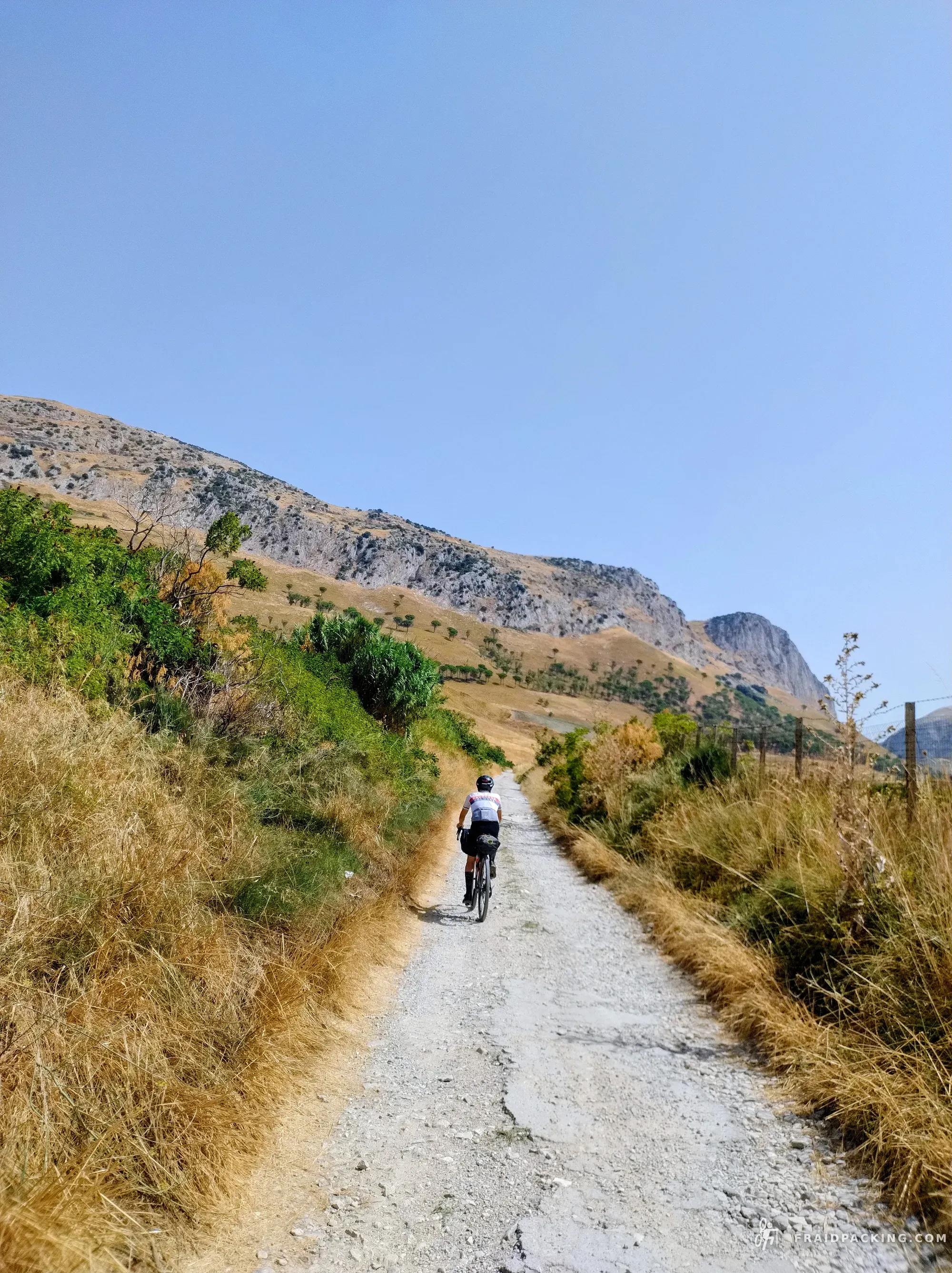
Day 2 trades the coast for the interior, pushing riders up into the rugged limestone hills that define Sicily's quieter, less-photographed heart. From Alcamo the road climbs relentlessly, wrapping through dry terraced slopes and sun-bleached scrub where the air thickens with wild herbs and the silence is broken only by distant goat bells. Over 1,500 metres of gain across 73 kilometres keeps legs honest all day, the gradient rarely letting up long enough to forget the effort. By the time Monreale appears on its ridge, the descent feels earned.
- 3
Ficuzza-Alia
From the high ridgeline above Monreale the interior opens without warning, a bleached and folded landscape that seems to belong to another century. The climbing is relentless through the morning, limestone scrub giving way to bare switchbacks where the silence is broken only by wind and effort. By midday the route has settled into a rhythm of steep ascent and fast descent, the hills rolling in long amber waves toward Alia. It is hard country, spare and sun-scoured, but the reward is a solitude that feels earned.
- 4
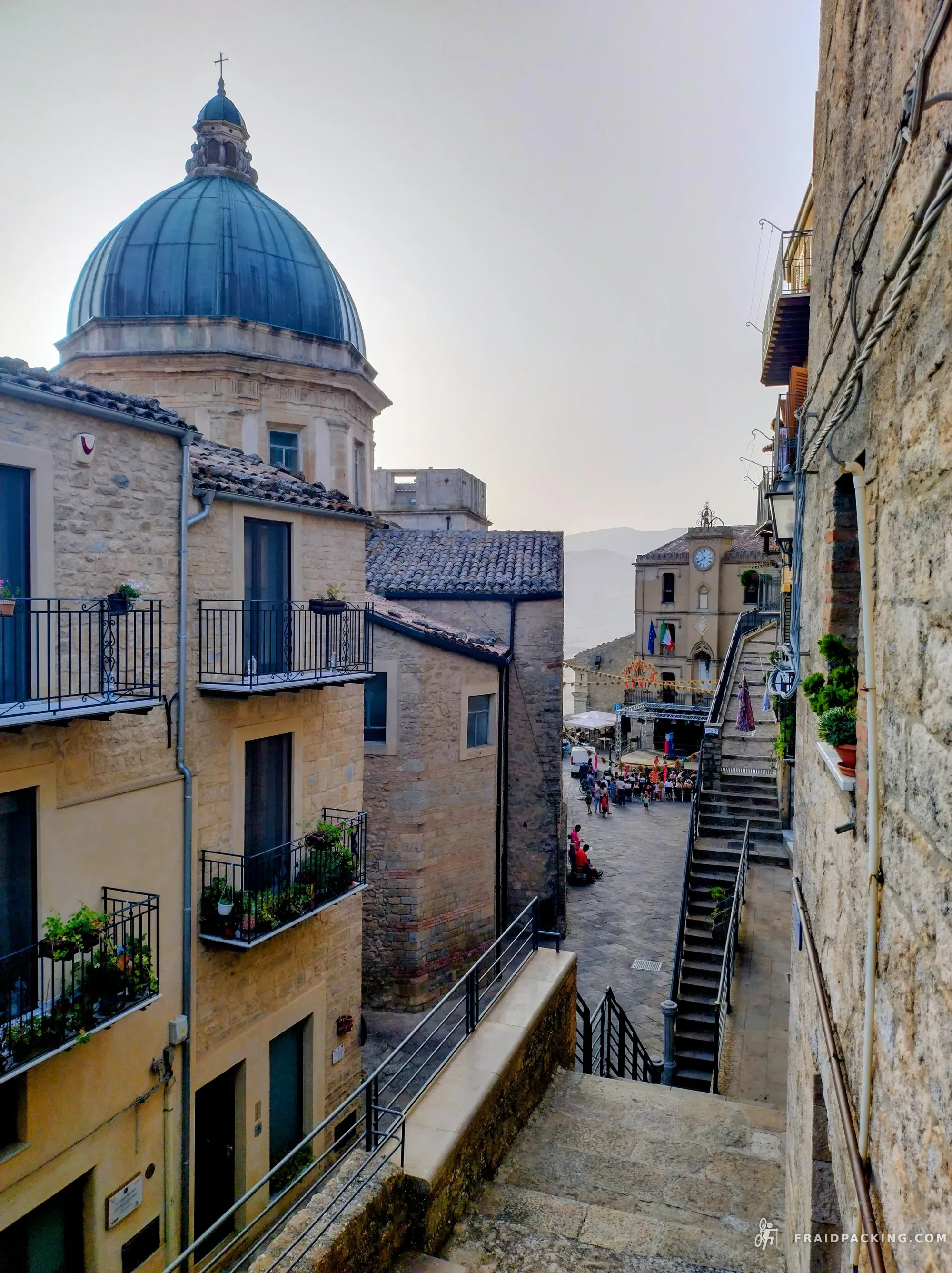
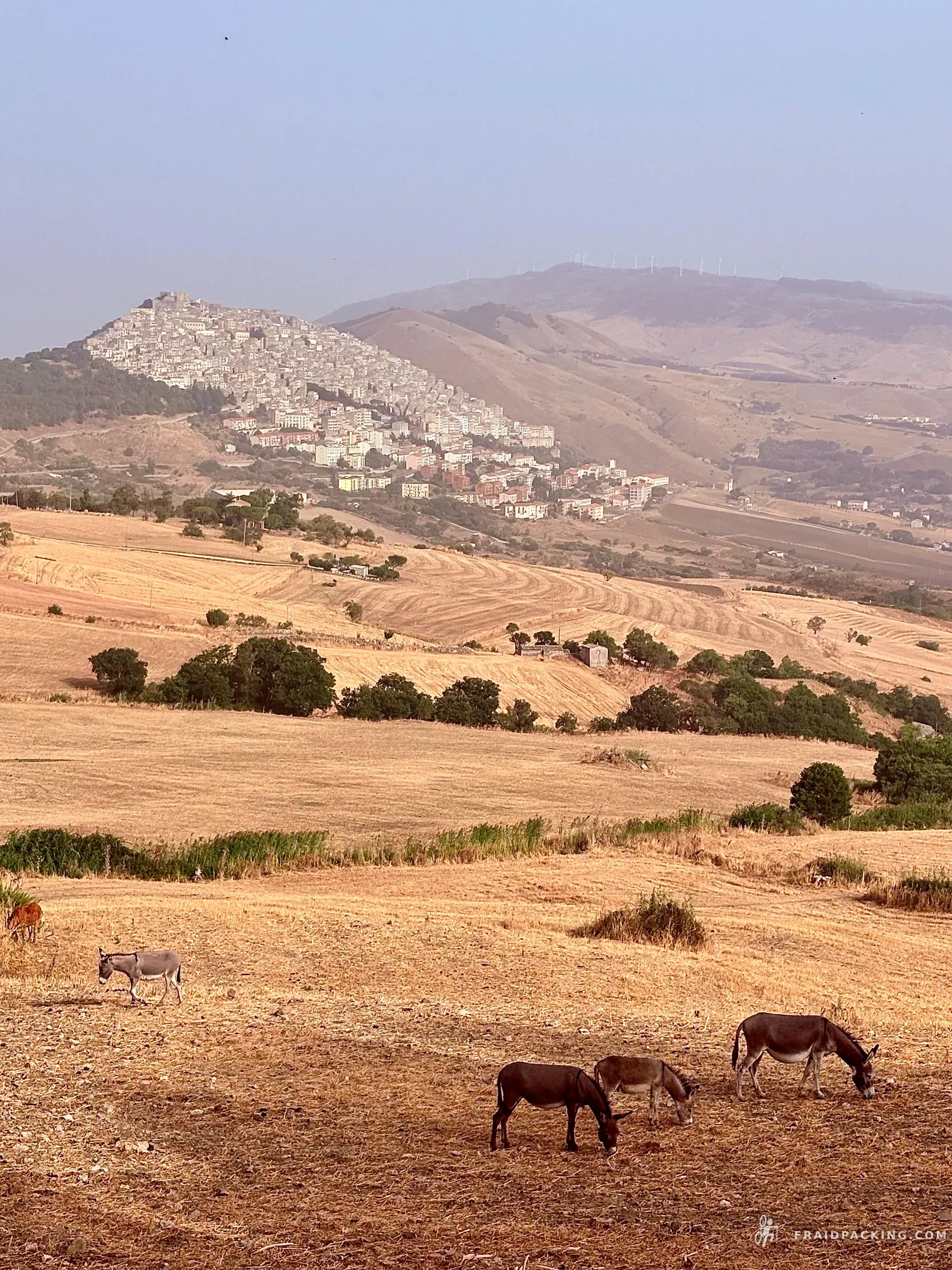
Alia-Gangi
Day 4 trades the coast's easier rhythms for something more relentless: 76 kilometres of climbing deeper into Sicily's rugged interior, with nearly 1800 metres of elevation gained between Alia and Gangi. The land here is ancient and unhurried, all sun-bleached ridgelines, terraced hillsides, and the kind of silence that presses back. Each climb reveals another folded valley, ochre and olive-grey, stretching toward a horizon that never quite arrives. By the time Gangi appears on its crest, earned rather than reached, the legs know exactly what the day cost.
- 5
Gangi-Cesarò
From the saddle of a high Nebrodi pass, the land opens into something vast and unhurried — rounded ridges furred with oak and beech rolling away in every direction, the silence broken only by wind and the occasional distant bell of grazing livestock. The 79 kilometres from Gangi to Cesarò demand patience, each valley descent offering only a brief reprieve before the legs are called back into the climb. This is interior Sicily at its most elemental: no coastline glamour, just ancient hill country pressing back against every pedal stroke. By the time Cesarò appears, earned is the only word for it.
- 6
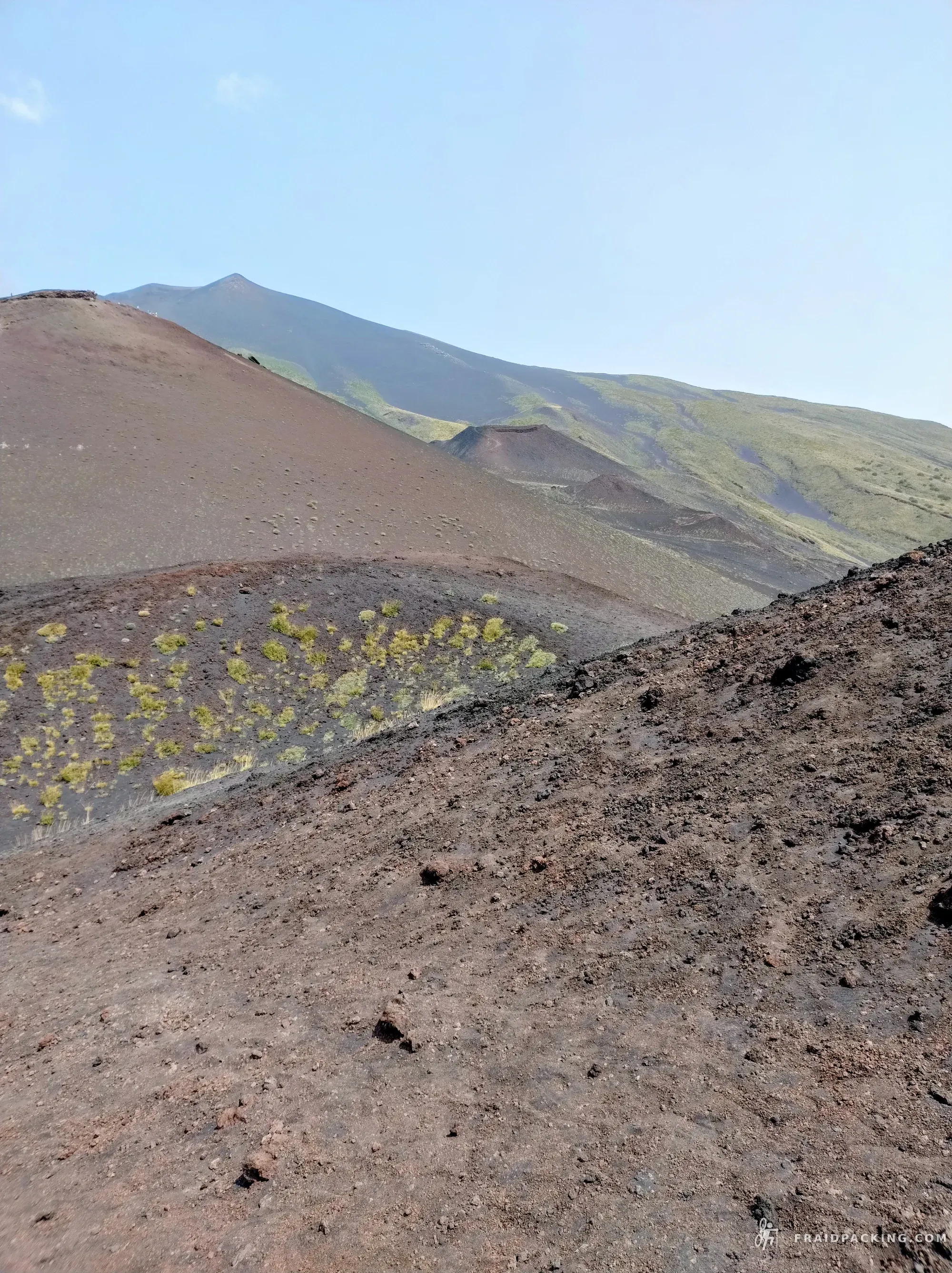
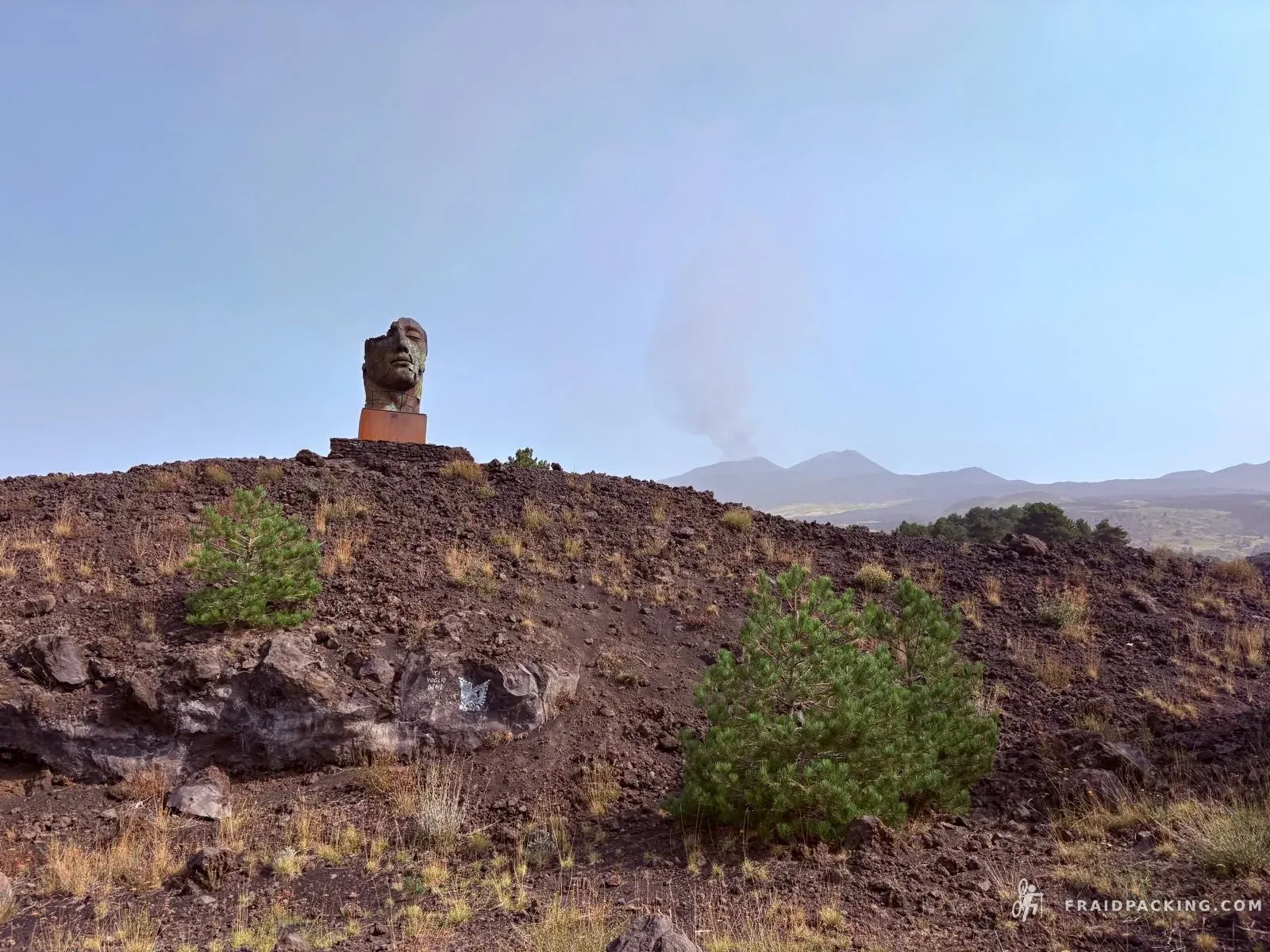
Cesarò-Etna
Rugged highland terrain sets the tone from the outset, the legs already tested by steep gradients that push nearly 1800 metres of climbing into just 60 kilometres. The landscape is wild and exposed, volcanic in character, with the brooding bulk of Etna dominating the horizon as the route edges closer to the mountain's southern flanks. Scrubland and lava-scarred slopes replace softer scenery, the air thinning and sharpening with altitude. It is a day of genuine physical reckoning, rewarded by a landscape that feels elemental and vast.
- 7
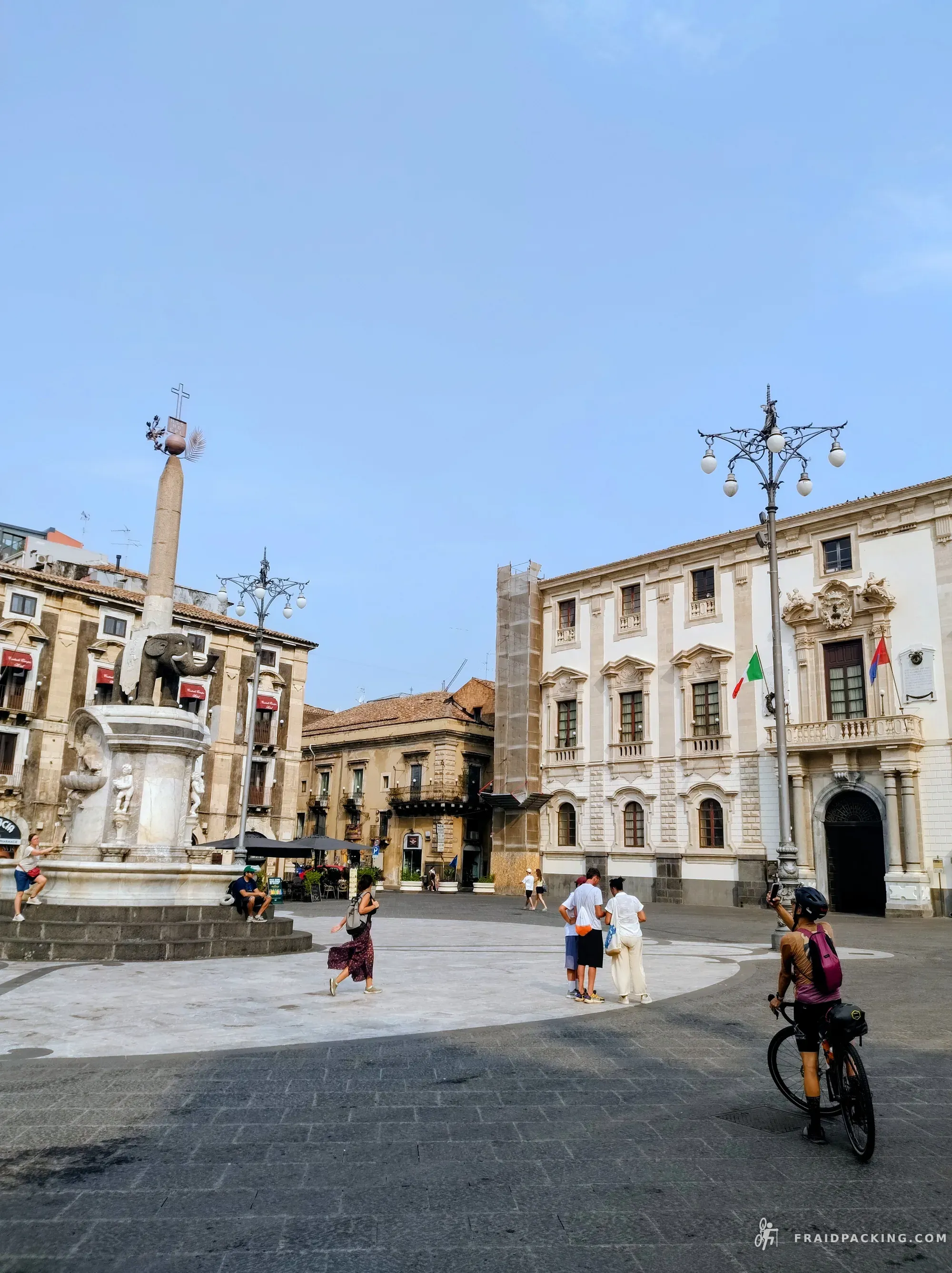
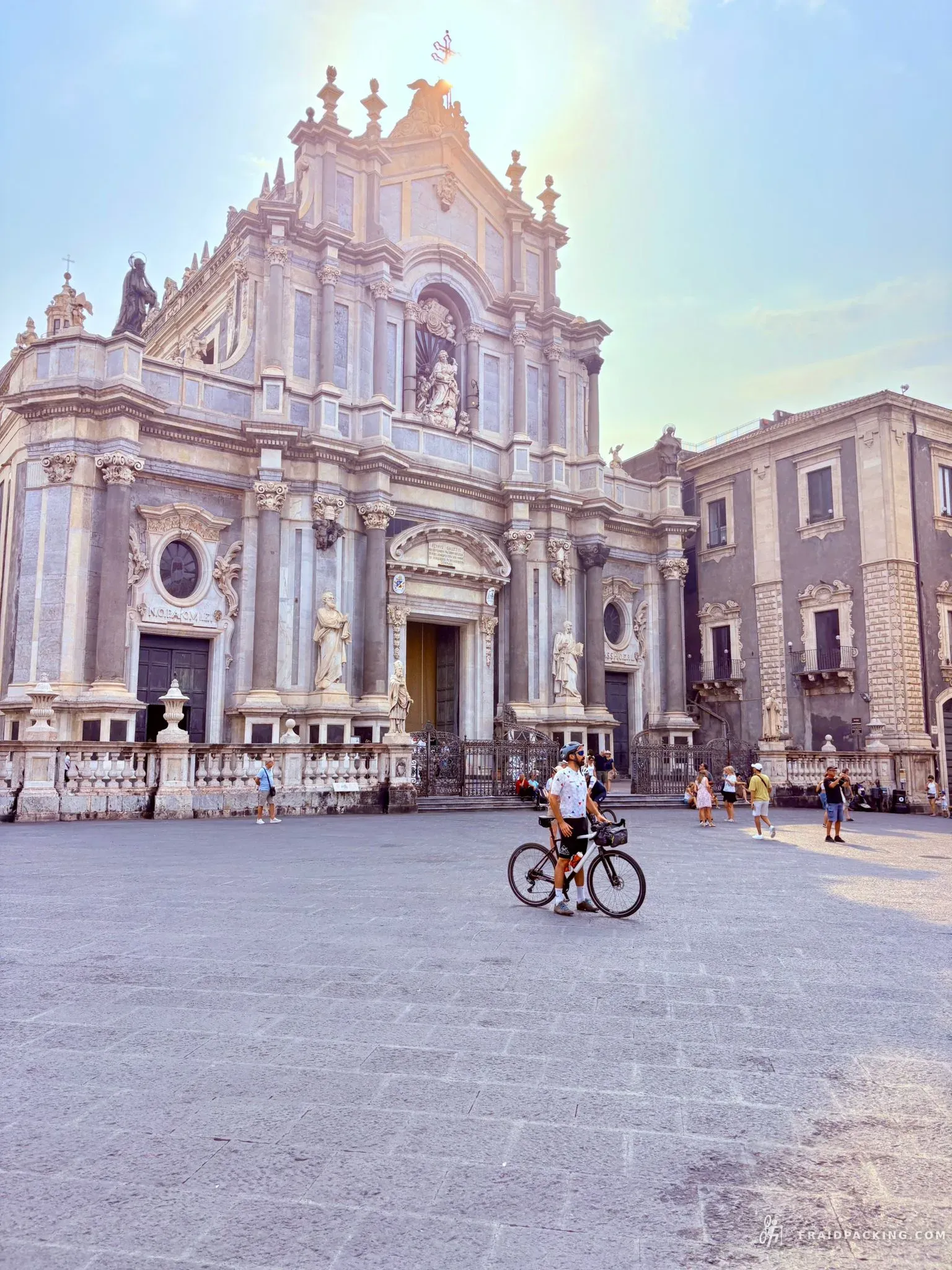
Etna-Catania
The final day unspools gently downhill, a long exhalation after six days of volcanic climbing and rough track. The gradient barely registers, and legs that have earned their rest carry the rider almost effortlessly as the landscape softens from mountain scrub into the warm, dense sprawl of Sicily's eastern coast. Catania grows on the horizon, its urban noise rising to meet the silence of the hills. Thirty-four kilometres of quiet arrival — the sea, the city, the end.
Photos